This Land is Your Land

When the sun came shining, and I was strolling
And the wheat fields waving and the dust clouds rolling
As the fog was lifting a voice was chanting
This land was made for you and me

But is it? ...

I started thinking about that song last night while I was lying awake in the camper trailer. We are living on someone else's land. And even though we feel a lot of freedom from the people we rent from, we still have to be considerate of what we do and how we use their land. It's not our land, even though it is the best land we've ever lived on and the thought of leaving it pains us.

We started to look at purchasing our own land, but one of the things we had to consider was if it would become more of a financial burden. Down payments and interest rates are higher for land loans than for mortgage loans, and can range somewhere between 20-50 percent.

So the idea of buying raw land and building on it may not be financially in our best interest. Right now, it makes more sense to buy land that already has a house on it even if we don't intend to live in it right away.

As I went walking I saw a sign there
And on the sign it said "No Trespassing"
But on the other side it didn't say nothing
That side was made for you and me

People ask why we haven't started the tiny house project yet, and as you can see it's not so easy when you're toying with building on someone else's land vs. buying on your own. I can't help but feel like I'm letting people down. When you start a business, organization or movement, like we have, you intend on setting a goal and fulfilling it. We still intend to follow through, but we've learned a lot along the way that have prepared us to take our time with it.

When we moved into a camper trailer almost six months ago, we thought it would be move-in ready. Perhaps we were just a little too excited and naïve at the time. The first month was filled with small steps toward feeling comfortable and secure. Greg had to work fast to create insulation and radiant barrier blocks for the windows so that we could stay warm at night. We had to setup our electricity and WiFi (cords that run almost 200 feet from the house on the land we are renting from). We had to find a full-sized refrigerator that we could store outside.

Little by little, like the insulation tiles that fit into our windows, the tiny camper trailer came together. But like any house, there are still projects to be done.

For example, I broke our skylight a few weeks ago when we were doing a photoshoota honest mistake, but one I didn't realize would have future implications. A week later, while Greg was sleeping, he awoke to a stream of water coming from the roof. The snow had started to melt and was coming through the cracks of the skylight.

I wish I had a photo of this, but I was too frozen in the moment to know what to do at the time. This little incident made us fully realize how close we are to nature. We can hear every raindrop that falls on the camper from all angles. When the sun shines during the day, the camper warms up and glows.

We are already a part of the tiny house movement. And when I say, "tiny," I really mean it. 140 square feet of tininess. But some people don't see the camper trailer as a "home" like they do a tiny house on wheels. I think that's one problem with the tiny house movement currently. A house can't be a house unless it looks like one, right?

Home is where the music lives.

Camper trailers and RVs are homes for a lot of people in the tiny house movement. We are less recognized because our homes come in all spaces and sizes.

We are struggling to figure out ways to save money so that we can someday build a tiny house, one that would be larger than the one we already live in. But first we have to take care of the house we live in. We have to make wise decisions on where we are going to build it, what it's going to look like, its mobility and size. Buying land with a house that we can rent out while we live in the camper trailer and build a tiny house is an idea we are feeling good vibes with right now. We just need to save a little more and find that perfect fit before we can get started.

But until then, we will be living on someone else's land and reaping the benefits until we find land that we can call are own.

In the squares of the city - In the shadow of the steeple
Near the relief office - I see my people
And some are grumblin' and some are wonderin'
If this land's still made for you and me.
Guest Post: 5 Ways To Find Money To Help Your Build

This month we are featuring a guest post by Andrew Odom, founder of Tiny r(E)volution. The tiny house movement is filled with wonderful souls and Andrew is one of them. We connected on social media a few months ago and it feels like we've already met. That's the power of the web, my friends.

I asked Andrew to help us begin our tiny house project. I told him that we were struggling to get started as financials are always tight. Since he has a wealth of knowledge from formerly living in his own self-built tiny house, I thought he'd be the perfect expert to give readers a realistic outlook at how a couple like us can get "rolling."


Have you ever looked up quotes about money and saving money? Most of them read like poor advice from someone who falls into one of two categories. The first category is ‘People Who Save Money To Sit On It.' The second category is ‘People Who Save Money Because They Fear Losing Their Job One Day.’ Nowhere is there a witty quote by someone who saves money because they grew up understanding that need is not the same as want and two pennies earned can easily be a penny saved. Why all this talk about money though? Isn’t this a blog about building a tiny house? Aren’t tiny houses cheap to build?

Tiny House Myth #1

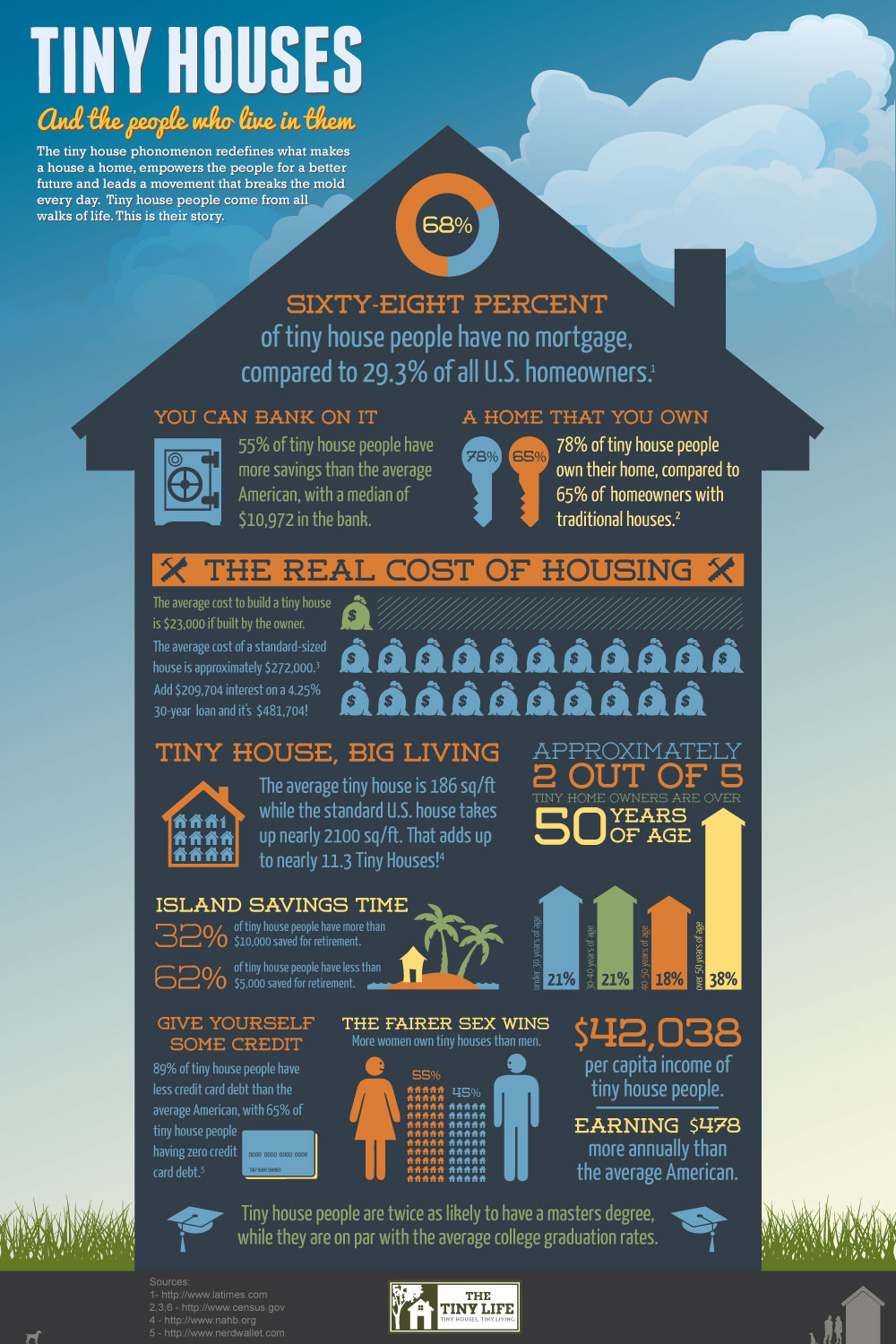
Building a tiny house is cheap. According to The Tiny Life report (2013), the average cost to build a tiny house is $23,000 if built by the owner. This figure does not include the cost of the trailer though.

So with this figure in mind how does one continue to meet monthly financial obligations (rent, utilities, groceries, etc.) during the build while building the tiny house? It is a daunting thought. It is actually akin to running two households for an extended amount of time. There has to be a way though. Good news. There are. In fact, below are:

5 Ways To Find Money To Help Your Build

  1. Define your budget a minimum of six months prior to building.
    Perhaps one of the first mistakes made by someone building a tiny house is lack of preparation. Unless you are independently wealthy or have secured some sort of creative financing, the build is being financed by you. So give yourself time to accumulate build funds. The trailer is the first purchase and perhaps the largest. That should also be the first line item on your budget. Decide what utility trailer you want to purchase, work out a contract with the manufacturer (this will contractually secure a price) and save the money. Now I can’t tell you how to save the money because that is dependent on your personal expenses. But don’t start your tiny house out by credit card or trailer financing. Start out like you can hold out. Go cash-on-the-barrel from the get go. Then continue on focusing on sections. Your second line item should be the drying in stage of your tiny house. Continue through your build making small financial goals that are clearly defined. Then work towards them.

  2. Salvage always.
    It is never too early to start gathering materials. I am not talking about purchasing materials but rather salvaging them or reclaiming them. While you are in that pre-build phase stop at every wood pile you see, every construction zone you pass, and every FREE MATERIALS posting you fine. Look at it like this. Every 8’ long 2’x4’ you are able to reclaim is a minimum of $2.11 back in your pocket come build time!

  3. Develop partnerships.
    It is no secret that our tiny house build was made possible through several partnerships. Please note. This is NOT free money. A partnership is a mutually beneficial relationship between two entities. I spent a lot of time approaching sponsors and talking to them about how they could help me and how I could help them. Some signed on and others passed. But for every item donated my wife and I were able to save a little money on materials and in return help a company out that we believed in and believed in their product.

  4. Consign/Sell/Trade It.
    Part of transitioning to the tiny house life is downsizing. Before going tiny many of us occupy much larger houses and have the stuff to prove it. So why not kill two birds with one stone. Gather up the items you are ready to part with and sell them, consign them, or trade them. If you sell them in some way earmark that money for your tiny house build ONLY. If you have things like tools, technology, or cookware, consider bartering or trading them for tools you may really need for the build or building materials, etc. You would be surprised how many folks have been wanting to give away that old pocket door in their attic and have also always wanted a stereophonic album of Led Zeppelin Live At The Fillmore!

  5. Just Ask.
    While it seems a lot of people talk about their friends and family not supporting their desire to go tiny a lot of folks have a large support group. Humble yourself and ask them for help. Perhaps your uncle has some old wood he might consider donating. ASK! Maybe you have siblings who each year give you an Olive Garden gift card at Christmas. Ask them to switch up to Home Depot or Menards this year. Heck, don’t be afraid to start a “registry” at a home improvement or big box hardware store and tactfully share it with your parents, aunts and uncles, and even friends. You’d be surprised how many people get a kick out of seeing others achieve their dreams.

Photo Credit: Susy Morris (chiotsrun.com)

Funding a tiny house build is not easy. Like everything in this world it costs money and that isn’t always readily available. But don’t become discouraged. Be creative! Never pass up a penny in a parking lot and never be afraid to ask the contractor down the street if he minds you picking through his dumpster!


Author & photographer: Andrew Odom

Founder of Tiny r(E)volution and author of the popular book ‘Your Message Here: GAINING CORPORATE SPONSORS for your tiny house project’, Andrew Odom is a social media strategist and content crusader amongst other things. He is also an accomplished photojournalist with work seen in Details, Relevant, South, Kitchen Drawer and Tiny House Magazine(s). His proudest accomplishment however is his long-time adoption of and current advocacy of the tiny house/small house/unconventional house community as a designer, builder, dweller and speaker. Having recently sold their 240 sq. ft. tiny house Andrew and his wife (as well as his 3-year old daughter) live and travel in a 27’ Aruba travel trailer.